The last camel finds its place in the sand, and the sun slips behind the dunes like someone turning down a lamp. For a few minutes the whole desert glows copper, then violet, then a deep, quiet blue. This is the moment Merzouga has been waiting for all day.
The Hour When the Desert Changes Colour
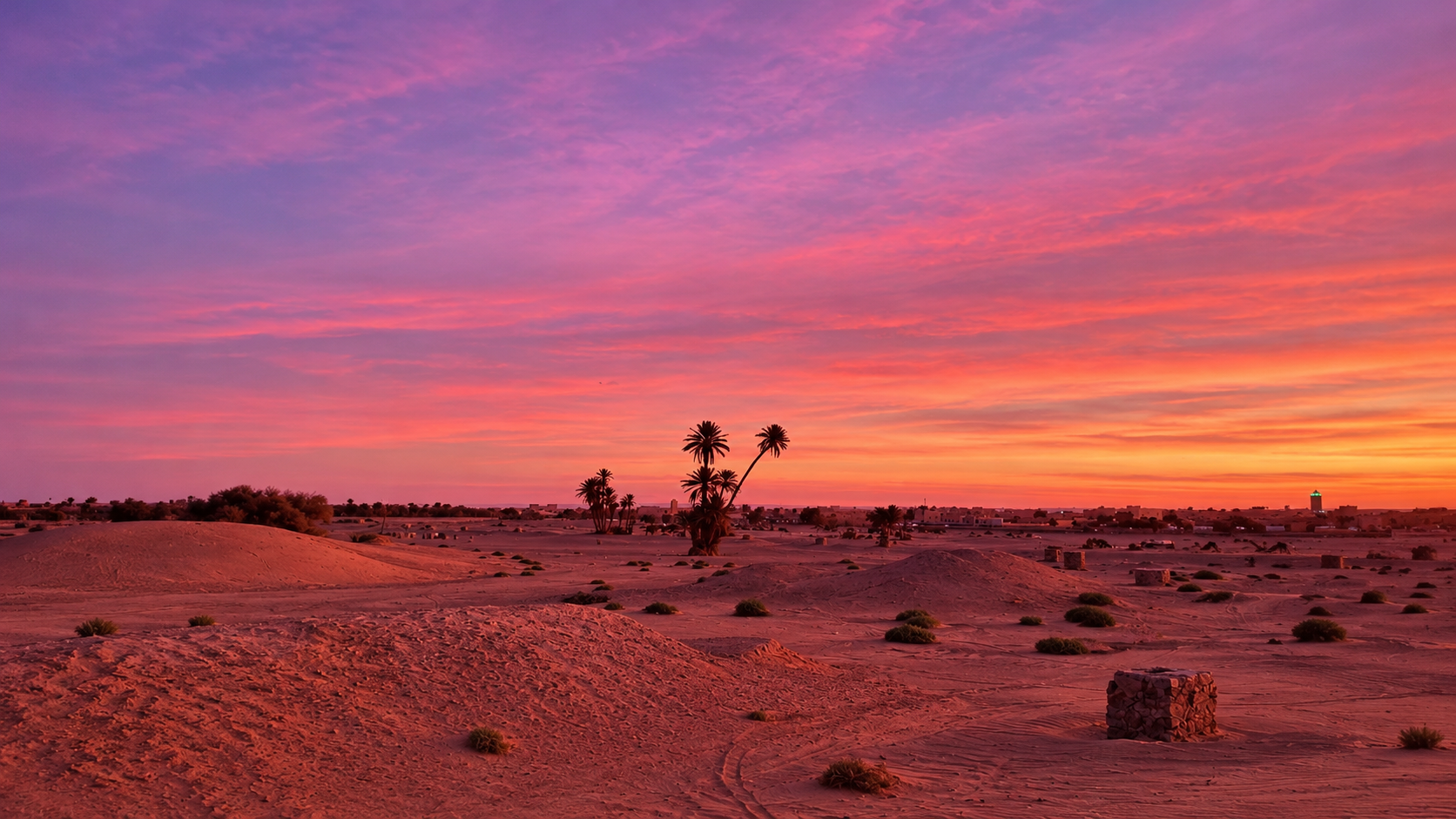
Dusk in the Sahara does not arrive slowly, it arrives in layers. The heat lifts from the sand, the wind softens and the dunes lose their sharp edges. Shadows stretch so long they seem to belong to another place.
If you are walking back to camp at this hour, stop and look behind you. The footprints you left an hour ago are already disappearing.
Arriving at Camp
Lanterns are lit one by one. Rugs are laid on the sand around a small fire and the smell of woodsmoke mixes with spiced tagine and mint tea. Nobody is in a hurry here, and that is the first thing the desert teaches you.
Dinner Under Open Sky
Dinner is simple and warm, usually a tagine served with fresh bread, followed by fruit and sweet mint tea poured from a height. Conversations are slow. Phones stop being useful, because the signal is weak and nothing on the screen compares to what is above you.
Drums Around the Fire
After dinner, the camp team often brings out drums and sings Berber and Gnawa-inspired songs. The rhythm is hypnotic, steady like a heartbeat. Some nights everyone joins in, and some nights you simply listen with your knees pulled to your chest, watching the sparks rise.
The Sky You Forgot Existed
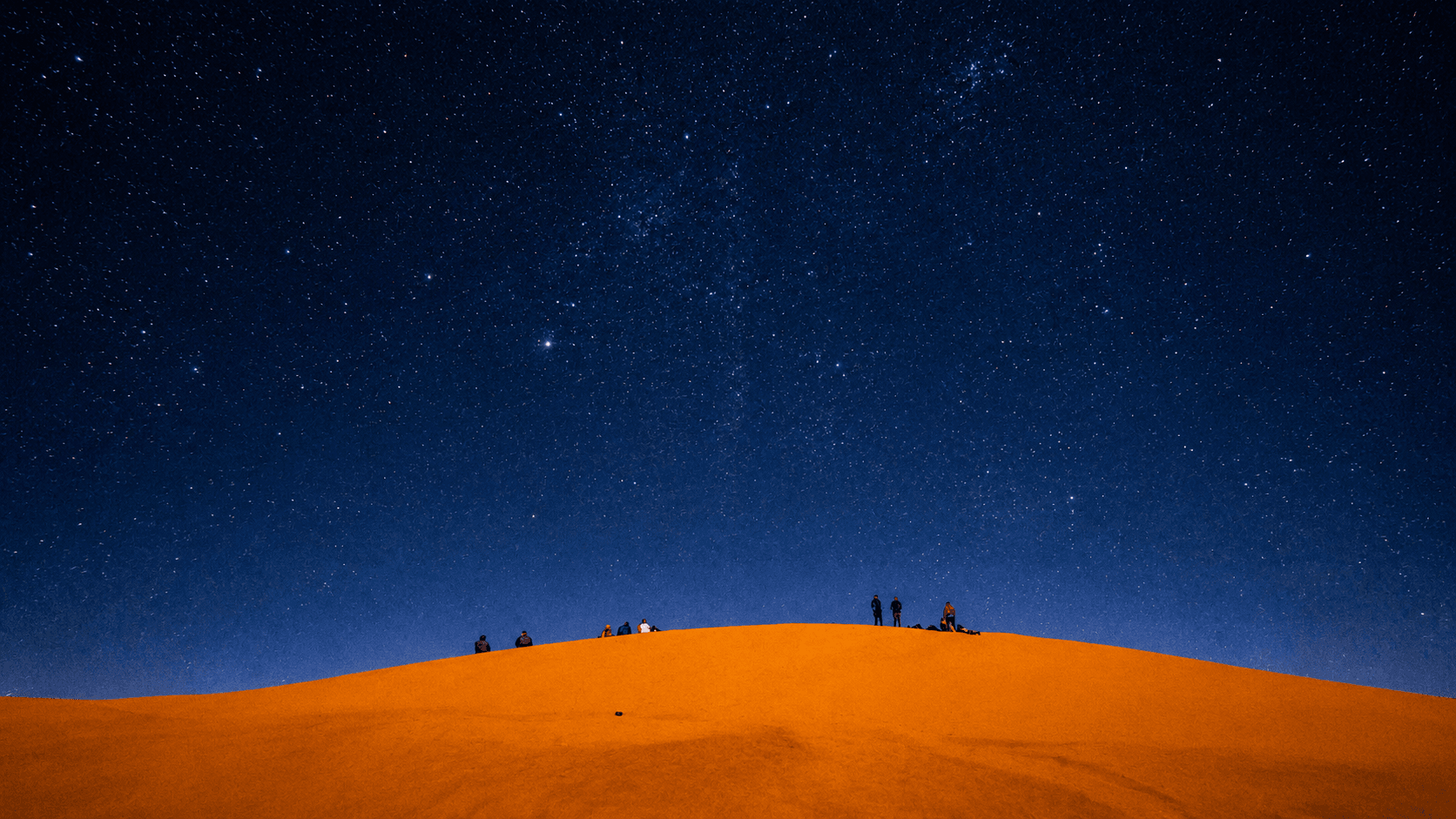
Walk a few minutes away from the fire and let your eyes adjust. Far from city lights, the sky fills with more stars than most people have ever seen. On clear nights, the Milky Way stretches across the dunes like a pale river.
Lie on a blanket, stay quiet and wait. Shooting stars are common, and the silence is so complete that you can hear your own breathing.
How Cold Does the Desert Get?
Colder than most travellers expect. Even after a hot day, temperatures can drop sharply after dark, especially from late autumn to early spring.
Bring a warm jacket, a scarf and a hat for winter nights. Wear closed shoes, since sand cools quickly. Most camps provide thick blankets, but ask in advance.
Sleeping in a Desert Tent
Tents range from simple Berber tents with mattresses and blankets to more comfortable camps with private beds and bathrooms. Either way, the sleeping experience is the same: no traffic, no noise, only the wind brushing the canvas.
If you wake in the middle of the night, step outside for a minute. The stars are still there, and the dunes look like sleeping animals under the moonlight.
Wake early, before the camp stirs. Climb the nearest dune with a blanket around your shoulders and wait. The horizon turns pink, then gold, and the first light crawls across the sand like a slow wave.
This is the reward of the whole journey. It is quiet, cold, beautiful and entirely yours.
Tips for Your Night in Merzouga
Book at least one night. A day trip misses the best part. Check the moon phase. A new moon gives the darkest sky for stargazing, and a full moon makes the dunes glow. Bring a small torch or headlamp for walking between tents. Carry water and sunscreen for the day side of the trip. Keep your camera ready, but remember to look up without a screen too. Choose a camp with good reviews and clear information about what is included.
Final Thoughts
Merzouga by day is impressive. Merzouga by night is something else, a place where time slows and the sky comes down to meet you. Whatever the rest of your trip looks like, give the desert one full night. You will remember it long after you leave.